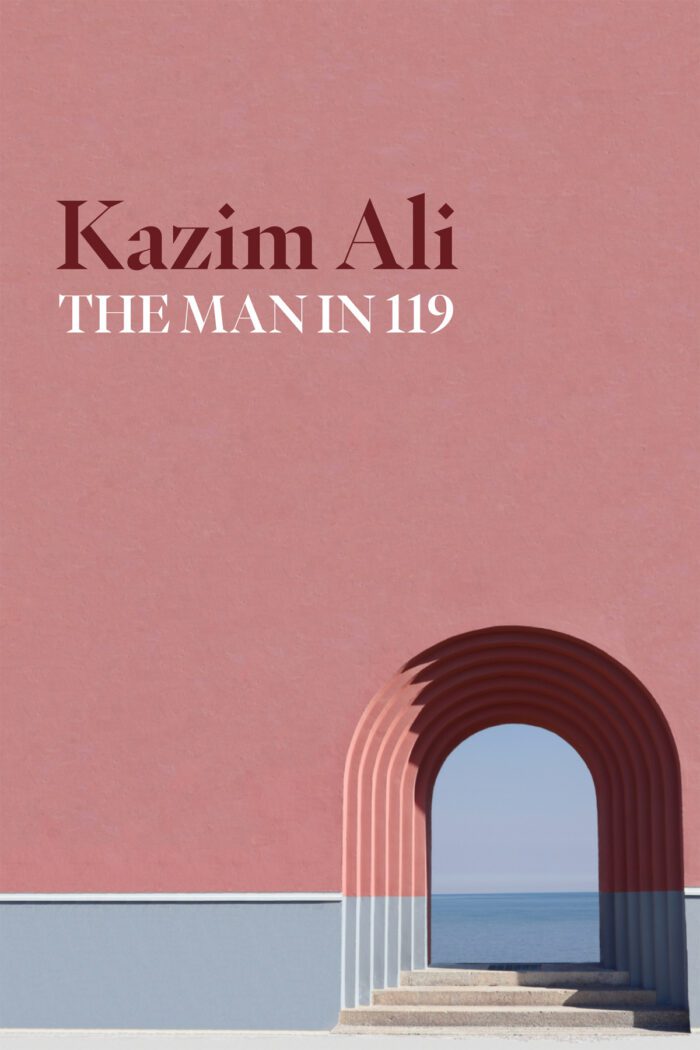
The Man in 119, the latest collection from accomplished poet Kazim Ali, explores loss and absence alongside the human body and the natural world. Here, the tongue becomes a collaboration between human and glacial current—the self, a “tectonic topography of god.” Grappling with questions of mortality in the wake of his mother’s passing, Ali asks where we go when we leave this world: “earth or sky or memory only.” With musicality, these poems build a space for contemplation, offering vignettes of various individuals, memories, and geographies. We learn that in migration, the body moves, reproduces itself through the experience of losing and living still.
ISBN: 9781556597299
Format: Paperback
Praise for Kazim Ali and The Man in 119
“Drawing on a wide range of traditions and forms—including the Sufi dargah, Indian Mangalam, Homeric epic, qasida, zuihitsu, and anti-epithalamion—the poems [in The Man in 119] remain formally adventurous while sustaining their intimate emotional register. This ambitious collection rewards close attention.”—Publishers Weekly
“Ali’s prolific, lyrical output is defined by the author’s queer and Arab identities, and consistent themes surface, such as orchestral corporeality, inscrutable divinity, and linguistic uncertainty. Equal parts obliquely profound and candidly straightforward, this mid-career compilation captures an accomplished poet’s already astonishing body of work.”—Diego Báez, Booklist
“In his 2010 essay ‘Faith and Silence,’ Kazim Ali writes: ‘If there are a hundred unmentioned books in the world, it stands to reason, my father thought, that all peoples of the world, in all various times, must have had revelatory texts—why would anyone be left out of salvation, he wondered?’ That essay serves as the coda to Sukun, Ali’s collection of new and selected poems. Article 1.3 of the UNESCO declaration proclaims that tolerance ‘involves the rejection of dogmatism and absolutism.’ If readers were to truly appreciate the poetry that undergirds the ‘revelatory texts’ of every faith tradition, the light of tolerance and understanding might prevail over the poisonous absolutisms of 2023.”—Daniel Simon, World Literature Today