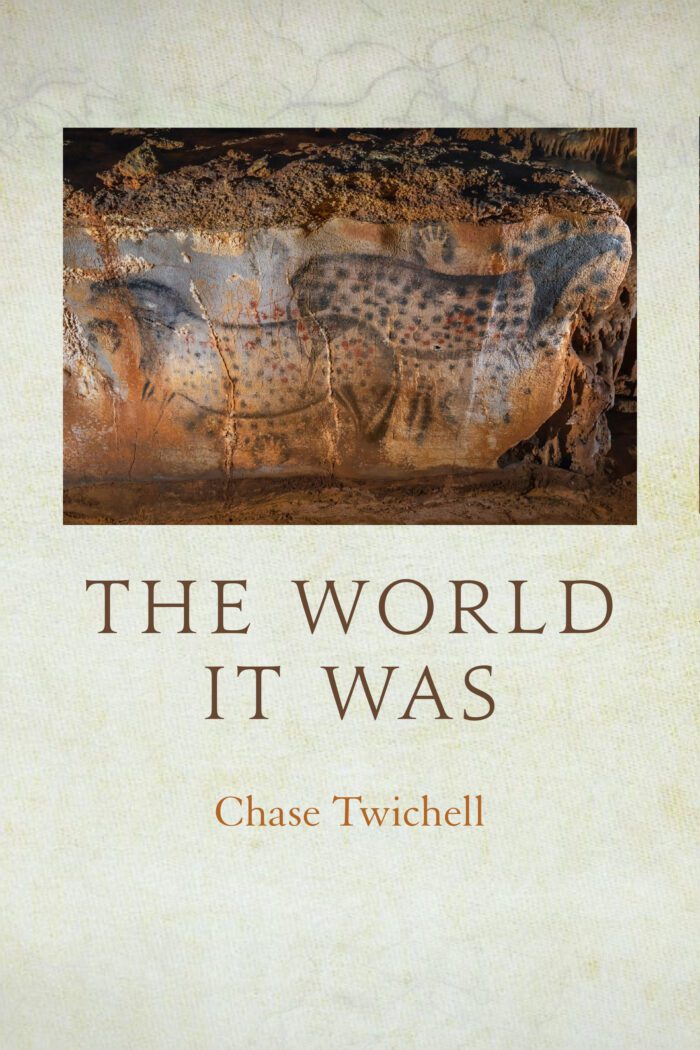
An elegiacal collection looks unflinchingly at the degradations of the planet and the human body with an urgent appeal to live fully and presently.
Written in the wake of the COVID pandemic lockdown, mass ecological tragedy, a chronic illness diagnosis, and the death of Twichell’s husband, The World It Was turns its gaze upon loss with unflinching lucidity. “Language is a door,” Twichell writes–yet she circles that door warily, questioning whether words can ever grant true communion with what lies beyond them. As she travels between memories of her childhood and reflections on her aging body, Twichell’s signature attentiveness and restraint call the reader to build a dwelling in the uneasy space between presence and grief. Part elegy, part meditation, The World It Was listens for the quiet intelligence of nature even as it mourns what has been destroyed. What remains is a grief that refuses consolation, instead insisting upon the necessity of seeing, naming, and being fully alive inside the brief body and the dying world.
ISBN: 9781556597381
Format: Paperback
“Dan’s Music”
Dan likes to sit on the upstairs porch in cyberspace
overlooking the mountains.
His chair on the porch is directly above
my chair in the room below.
Along with the faint songs of human talking,
I can just hear the bassline of his music
(usually fast) and the high notes.
I should pay more attention to Dan’s music,
which tells me to hurry but doesn’t say where.
It’s a distant subliminal constellation overhead,
indistinct. I should open my ear to it,
and my eye to the alpenglow
and my nose to the rain-bearing wind.
I should pay close attention to all of it
because all of it is all there is.
Reviews
Praise for Chase Twichell
“A major voice in contemporary poetry.”―Publishers Weekly
“[Twichell’s poems] open out into a stark, sometimes bewildered clarity.”—Robert Hass, Washington Post
“Suppose you had Sappho’s passion, the intelligence and perspicacity of Curie, and Dickinson’s sweet wit. . . then you would have the poems of Chase Twichell.”—Hayden Carruth
“Chase Twichell’s poems are among my favorite ever written.”—Tony Hoagland
“Her imagery, usually pleasing enough in itself, is never just flashy: it urges the speaker toward statement, personal disclosure, and intimations of vulnerability.”—Chicago Review