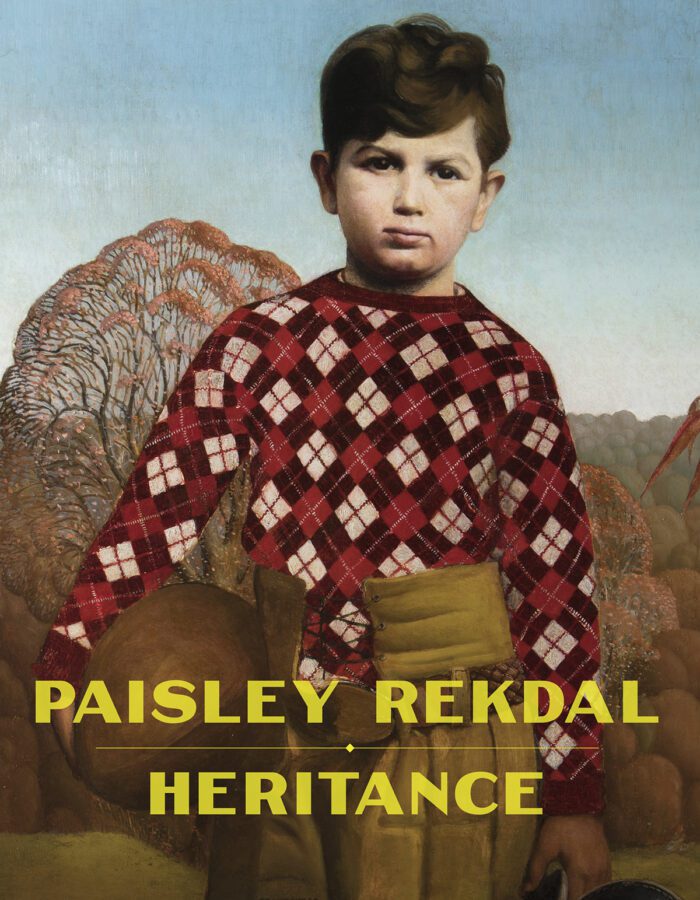
Writing from a mixed heritage, Paisley Rekdal voices both the sins of our fathers and the suffering of our mothers.
In Paisley Rekdal’s latest collection, Heritance, the body and its meanings are ever shifting—it is, at once, a legacy, an obligation, and a means of generating more bodies. Summoning memories of parents, former partners, and children both real and hypothetical, Heritance examines the personal and familial shames we inherit. Can something so ephemeral as memory be owned? In what ways do we become complicit in the political values of our families, our nations, and our chosen—or assumed—communities? Here, Rekdal grapples with the inevitable loss of loved ones and relationships, but also of climate change and social evolution—asking what values do we choose to preserve, and which ones do we reinvent for a new era? And in what ways can art recompense for our personal and cultural wounds? Meditating on race, violence, and lineage, Rekdal challenges the reader to contextualize their perspective within the corporeal, and to question what it means to love outside of “the lens of someone else’s imagining.”
ISBN: 9781556597367
Format: Paperback

Reviews
Praise for Paisley Rekdal
“Paisley Rekdal has always been a breathtakingly ambitious poet . . . She excavates an American shame that has yet to be reckoned with.”—Craig Morgan Teicher, NPR
“Rekdal is a poet of observation and history, one who carefully weighs the consequences of time. She revels in detail but writes vast, moral poems that help us live in a world of contraries.”—Craig Morgan Teicher, Los Angeles Times
“Paisley Rekdal’s gifts as poet and intellectual are intractable and manifold. With all of their rhetorical pleasures and illustrative rhythms, Rekdal’s poems are deeply marked by a sensate, near terrestrial, relationship to language such that she refreshes and renews debates about beauty, suffering, and art for the twenty-first-century reader.”—Major Jackson
“Paisley Rekdal’s quiet virtuosity with rhyme and cadence, her syntactic fidelity to thought and sensation, her analytical intelligence that keeps homing in and in, her ambitious sentences and larger formal structures that try to embody with absolute accuracy the difference between what we ought to feel and what we really do feel–all these make her unique in her generation: no one sounds like she does, and her concern about the ‘post’ in postconfessional is as much a sign of her earnest desire to honor every aspect of her art, as it is an anxiety that spurs her restless investigations of family, selfhood, racial identity, and erotic life.”—Tom Sleigh
“[Rekdal] is the sort of observer we should all wish for: disarming, frank, and intelligent.”—Arthur Golden
“Rekdal writes with eloquence, liveliness, and poignancy–a truly impressive achievement.”—Ha Jin
“Rekdal’s large voice is as capable of interrogation as of thunderstruck awe, and her spacious poetic site contains–it requires–chaos as well as shapeliness, irony as well as affection, velocity as well as entropy.”—David Baker
“Rekdal is not after mere sensation. She pursues the seeming randomness of life for the knowledge it has to offer.”—Andrew Hudgins